Why a screen proof is not enough
A colour on a monitor is emitted light; a colour on fabric is reflected light through a dyed or coated surface. The same hex value looks different on a phone, a paper proof and a polyester jersey, and none of those shows how the fabric behaves in a changing room or under floodlights.
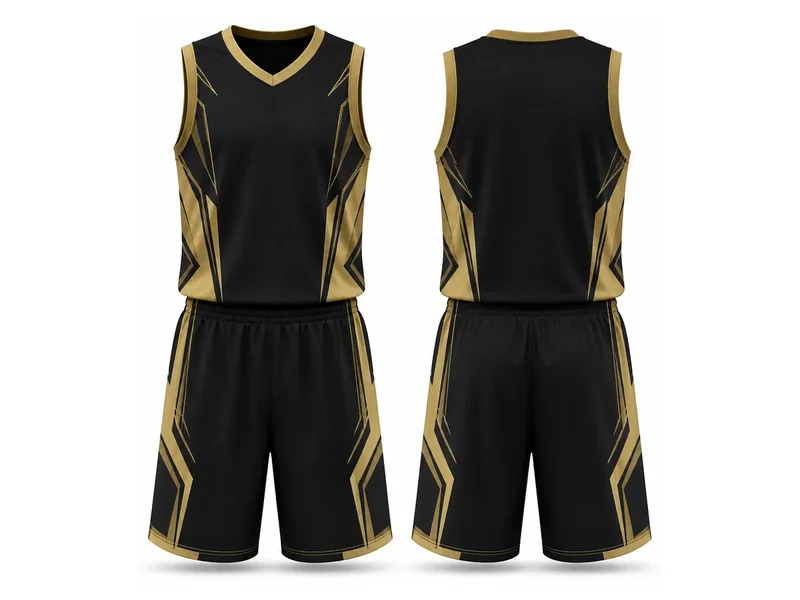
For a club kit, the colour has to work as a set: jersey, shorts, collar tape and trim. Each material takes colour differently, so each is approved as part of the same reference, not as an isolated artwork file.
That is why the approval step is a physical swatch or a decorated panel, not a PDF.
Base shade and sublimation
Dye sublimation prints into the fabric, so the base shade is part of the final colour. A bright white base reads cooler and more saturated; a cream or tinted base warms the same artwork. On dark bases, the artwork needs more density to hold its value.
This matters most on light colours — pale grey, mint, sand and sky blue — where a small shift in the base is visible across a large panel. It matters on gradients too, where the transition has to stay smooth on the actual knit.
The approved sample should be made from the production fabric, not from a substitute that happens to be in the sample room.
How a colour is approved
The method depends on the finish. Solid fabrics are matched with a lab dip; sublimated panels are checked with a strike-off printed on the production base. Both are compared against your reference under controlled light.
Two checks are worth doing:
- Daylight and indoor light: a colour that matches at the window can shift under warm indoor lighting.
- Side by side: compare the swatch with the reference on the same surface, not from memory or from two screens.
Once approved, the swatch is labelled and kept with the order file. That is the reference the bulk fabric check is measured against.
What changes between lots
Yarn lots, dye baths and heat-press conditions all move colour slightly. The purpose of a tolerance is to define how much movement is acceptable before a lot is rejected, rather than expecting an exact numerical match on every roll.
During production, fabric is checked for shade, weight and hand-feel against the approved swatch before cutting. If a lot sits outside the tolerance, it is raised before it becomes a finished garment.
The same record protects a repeat order. The second run is compared with the approved swatch, not with a photograph of the first delivery.
What to send
To approve a colour quickly, send:
- A physical reference if you have one — a previous garment, a swatch or a thread card.
- A Pantone or thread reference for each colour, and where it sits on the garment.
- The decoration method for each area: sublimation, twill, silicone, foil or embroidery.
- The lighting the kit will mostly be seen in — daylight, indoor court or stadium.
Send it with your brief through the contact page. If you are still choosing a direction, the catalog shows the colourways already developed across the six categories.